Businesses That Need Websites Are Everywhere (Find Them)
Walk down any main street in America and you'll spot them immediately. The bakery with a handwritten "Open" sign. The landscaping company whose Google listin...
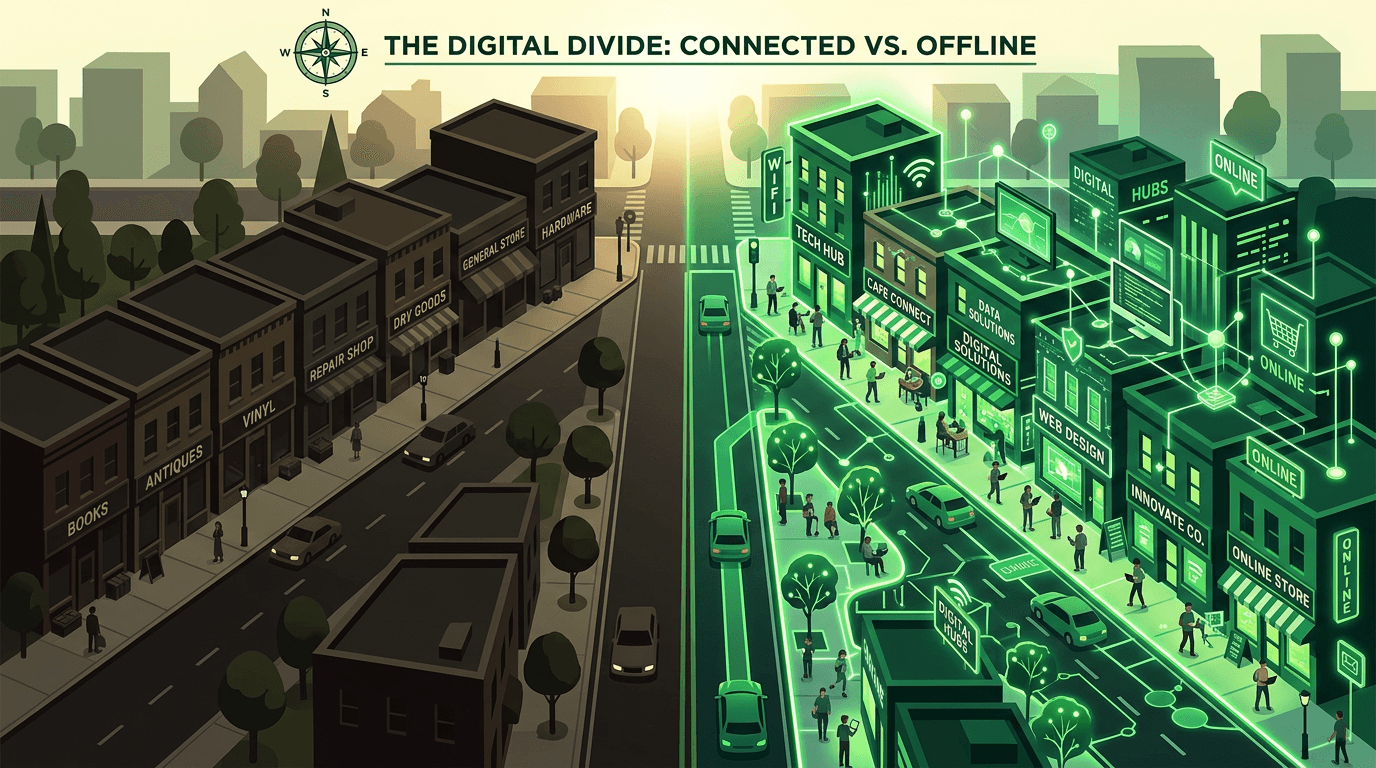
Walk down any main street in America and you'll spot them immediately. The bakery with a handwritten "Open" sign. The landscaping company whose Google listing links to a Facebook page from 2019. The HVAC contractor whose website still says "Under Construction."
As of 2024, 42% of small businesses still operate without a professional website. That's not a typo. Nearly half of local service businesses either have no online presence beyond social media, or they're limping along with something that actively hurts their credibility.
Whether you build websites for a living or run a business that needs one, this number represents massive opportunity. For web designers, it's a gold mine hiding in plain sight. For business owners, it's a wake-up call about revenue walking out the door every single day.
The demand didn't disappear. It just went local, and most people aren't looking in the right places.
The demand for websites didn't disappear — it went local
Here's what happened while everyone assumed "every business already has a website."
Small business owners got overwhelmed by choice. They heard horror stories about $50,000 web projects and $500 disasters. So they stuck with what felt safe: a Facebook page, a Google Business listing, maybe a basic template that never got finished.
The pandemic accelerated online shopping for retail, sure. But it also created a weird gap in local services. Restaurants pivoted to online ordering. Retail went e-commerce. But your neighborhood electrician? Still getting by on word-of-mouth and a Facebook page with 47 likes.
This creates two distinct problems. Web designers can't find the clients who desperately need them. Business owners can't see the revenue they're missing while their competitors quietly capture every Google search.
The opportunity is enormous. You just need to know where to look.
How to spot businesses that still don't have a real website
Most web designers hunt for clients by scrolling through LinkedIn or hoping for referrals. Meanwhile, thousands of prospects are sitting right there in Google Maps, practically raising their hands.
The Google Maps audit (your best free prospecting tool)
Open Google Maps right now. Search for "plumber near me" or "landscaping [your city]." Look at the first 20 results.
Count how many have no website listed. Count how many link to Facebook pages. Count how many have websites that look like they were built in 2003 and abandoned.
You'll find at least 8-12 businesses that either have no web presence or something that's actively damaging their credibility.
Here's your step-by-step audit process:
- Pick a service category (HVAC, cleaning, auto repair, etc.)
- Search "[category] in [your city]" on Google Maps
- Click through the first 30 business listings
- Note which ones have no website link in their Google Business Profile
- Note which ones link to Facebook pages or broken/outdated sites
- Add viable prospects to a spreadsheet with contact info and current status
This takes about 30 minutes and generates more qualified leads than a month of cold LinkedIn outreach.
The Facebook-page-as-a-website problem
Millions of small businesses treat their Facebook page like a website. They post business hours, share photos of their work, and list contact information. Then they wonder why the phone isn't ringing.
Here's what they don't realize: Facebook pages have zero SEO value for local search. When someone googles "roof repair near me," Facebook pages don't show up. Google shows websites.
Plus, you don't own Facebook. Algorithm changes can kill your visibility overnight. Your competitors' ads literally appear on your page. You can't capture leads or control the user experience.
To find these businesses, search Facebook directly for local service categories. Look for pages with business hours and contact info but no external website link. These are prime prospects who already understand they need an online presence but chose the wrong platform.
The outdated website red flags
Some businesses technically have websites, but they're doing more harm than good. An outdated site signals neglect and kills trust faster than having no site at all.
Watch for these warning signs:
- Copyright dates from 2018 or earlier
- Non-mobile-responsive design that looks broken on phones
- Broken images or "Under Construction" pages that never got constructed
- Free hosting branding (GoDaddy ads, Wix watermarks)
- HTTP instead of HTTPS (browsers mark these as "Not Secure")
- Contact forms that don't work
- Outdated service information or pricing
These businesses know they need a website. They just need someone to fix what they have or start over completely.
Industry goldmines — where to look first
Some business categories consistently lag behind on web adoption. Focus your prospecting here first:
Trades (HVAC, plumbing, electrical, roofing): Owner-operators who are too busy fixing things to fix their online presence. They rely on word-of-mouth but miss out on emergency calls from people who can't find them online.
Landscaping and lawn care: Seasonal businesses that assume their work speaks for itself. They don't realize homeowners research landscapers online before making calls.
Cleaning services: Huge demand, low web adoption. Most cleaning companies rely on Craigslist ads and flyers. A professional site with before/after photos and online booking crushes this competition.
Auto detailing and repair: Car owners absolutely research these services online, but many shops still operate like it's 1995.
Local restaurants without ordering capability: They have basic sites but no online ordering, no menu updates, no way to handle reservations digitally.
Salons and barbershops: Instagram-heavy but often lacking actual websites with booking systems and service information.
Each category has different pain points, but they share the same core problem: their customers search online, but the business isn't there to be found.
For business owners — why your competitors are investing in professional sites
If you recognized your business in the descriptions above, this section is for you.
What happens when a customer can't find your website
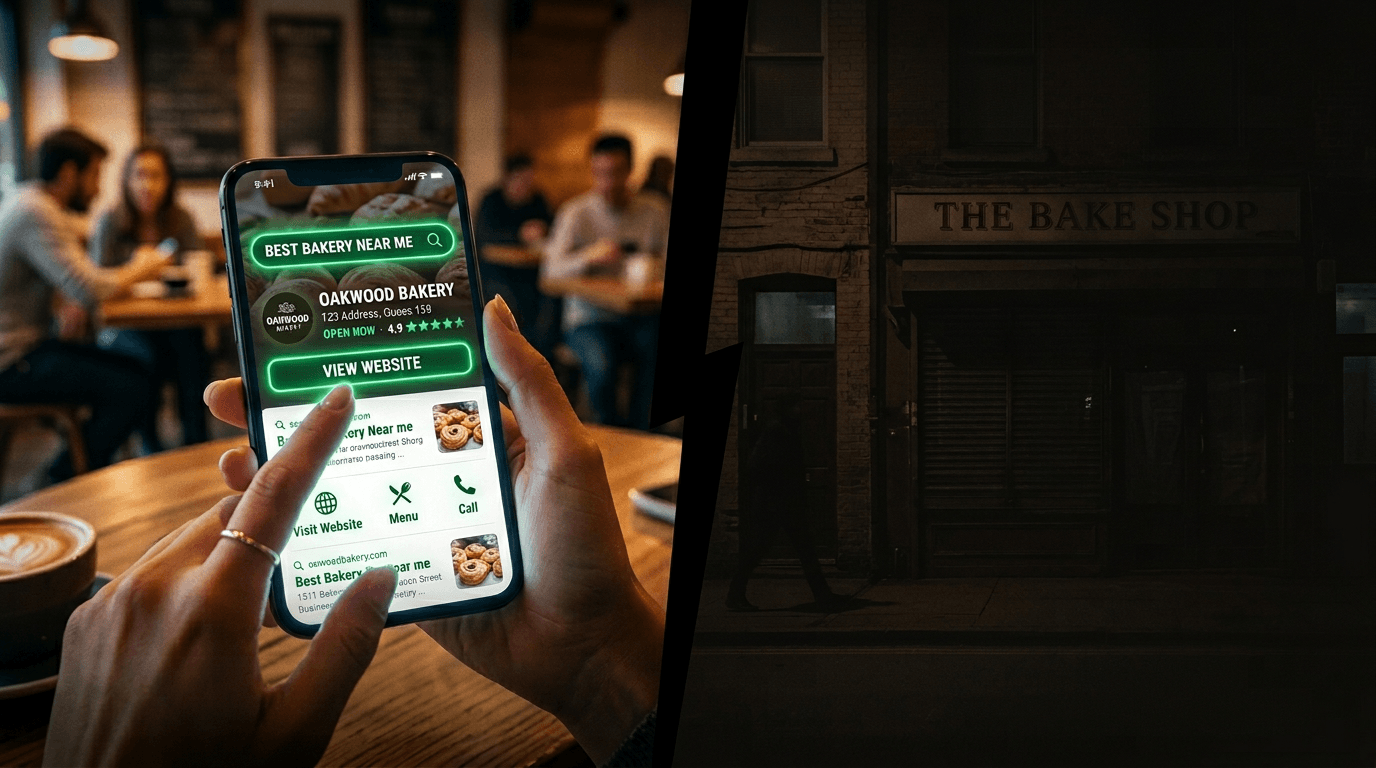
Picture this: someone's air conditioner breaks on a Saturday afternoon. They grab their phone and search "emergency AC repair near me."
Google shows them 10 options. Three have professional websites with clear service areas, emergency contact numbers, and customer reviews prominently displayed. Four have Facebook pages. Two have broken websites. One has no online presence at all.
Which business gets the call?
The one with the professional site gets called first. If they don't answer, the customer calls the second professional site. The businesses with Facebook pages get called only if the first group is unavailable. The ones with broken sites don't get called at all.
73% of consumers research service providers online before making contact. If you're not in that research phase, you simply don't exist for that customer.
A Facebook page is not a website (here's what it's costing you)
Your Facebook page might have 200 followers and regular engagement. That's great for community building. It's terrible for customer acquisition.
Here's why: Facebook pages don't rank in Google for service searches. When someone googles your industry + your city, websites show up on page one. Facebook pages show up on page never.
You also don't own Facebook. They can change algorithms, suspend accounts, or shift focus away from business pages. Your entire online presence could vanish tomorrow.
Worse, Facebook actually shows your competitors' ads on your page. You spend time building an audience, then Facebook monetizes it by showing them alternative options.
A professional website gives you control, SEO value, and the ability to capture leads instead of just hoping people remember to call you later.
Your competitors already made the move
This isn't a scare tactic. Open Google right now and search for your service in your town.
The businesses on page one have websites. Professional ones, with clear service information, contact forms, and mobile-friendly design. They're capturing every search while you're hoping for word-of-mouth referrals.
Even one competitor with a solid website siphons leads from everyone without one. They show up for searches you can't reach. They look more credible than businesses with Facebook-only presences. They convert more visitors because they control the entire experience.
Every day you wait is revenue walking to competitors who invested in professional online presence.
What professional website design actually costs (real numbers, no games)
Let's address the elephant in the room: price.
You've probably heard everything from "I can build you a site for $500" to "$50,000 for a custom solution." Both extremes miss the mark for most small businesses.
A professional small business website typically costs $2,000-$10,000. That's for a custom, mobile-responsive site with 5-15 pages, contact forms, basic SEO setup, and professional design that actually converts visitors to customers.
What drives the cost up? E-commerce functionality, complex booking systems, custom integrations, professional copywriting, and ongoing maintenance packages. What keeps it reasonable? Using proven templates as starting points, focusing on essential features first, and working with designers who specialize in small business needs.
For web designers, this range helps you price confidently and communicate value without sticker shock. For business owners, it helps you budget realistically and avoid both overpaying for unnecessary features and underpaying for something that won't work.
[For a complete breakdown of what influences website pricing and how to budget effectively, check out our detailed guide on small business website costs.]
A simple prospecting system for designers and agencies
Most web design prospecting advice boils down to "network more" or "get referrals." That's not a system, that's hope with a business card.
Here's a repeatable process that generates qualified leads in any market:
Step 1 — Pick a niche and a zip code
Don't try to serve everyone. Pick one industry and one geographic area. Go deep instead of wide.
Why? You can research their specific pain points, create targeted messaging, and build relevant portfolio pieces. A landscaping specialist in Denver will outcompete a generalist designer every time.
Start with industries you understand or areas where you have connections. The goal is expertise, not variety.
Step 2 — Build a hit list in 30 minutes
Use the Google Maps audit method from earlier. Create a simple spreadsheet with these columns:
- Business name
- Current web presence (none / Facebook only / broken site / outdated)
- Contact information
- Notes about their specific situation
Aim for 20-30 businesses per prospecting session. Quality over quantity. You want businesses that clearly need help, not ones where the need is questionable.
Step 3 — Lead with value, not a pitch
Don't call saying "you need a website." Show them what they're missing instead.
Offer a free quick audit: "I noticed your Google listing links to Facebook. Here's what that's probably costing you in visibility." Or: "I found three ways your current site is turning away customers. Want to see them?"
Use the cost context from above to have honest budget conversations from day one. No point spending time on prospects who think professional web design costs $300.
Step 4 — Show, don't tell
Build one or two demo sites in your target niche. Not for specific clients, but as examples of what's possible.
Before-and-after screenshots work better than generic portfolios. "Here's what most landscaping sites look like vs. what they could look like" is more compelling than showing off your design skills on unrelated projects.
Case studies close more deals than portfolios. Even small wins ("This plumber got 40% more calls after we redesigned their site") prove value better than pretty pictures.
The bottom line — the opportunity is right outside your door
The businesses that need websites aren't hiding. They're the bakery on the corner with a handwritten menu taped to the window. They're the plumber three listings down on Google Maps whose contact info just says "Call Bob." They're the landscaping company whose Facebook page has 200 likes and zero website traffic.
For web designers: stop wondering where the clients are. They're everywhere, practically begging to be found. The Google Maps audit alone will generate more qualified leads than months of traditional networking.
For business owners: if you've read this far and recognized your business in these examples, your next step is clear. The cost is lower than you think. The cost of doing nothing keeps growing every day your competitors capture searches you can't reach.
The demand for professional websites didn't disappear. It just moved to Main Street, where most people aren't looking. Now you know exactly where to find it.
Ready to stop missing opportunities? Whether you need a website that actually converts visitors to customers or you want help finding businesses that need your services, let's talk about what's possible for your specific situation.
Frequently asked questions
How do I know if a business really needs a website or just wants one? Look for businesses that rely on local search traffic but have no Google presence beyond their business listing. If they're in a service industry where customers research before calling (HVAC, contractors, restaurants), they need a website, not just want one.
What's the fastest way to find 50 businesses that need websites? Use Google Maps to search for local service categories like "plumber [your city]", "cleaning service [your city]", "landscaping [your city]". Check 30 businesses per category. In 2-3 hours, you'll have a solid prospect list.
How much should a small business expect to pay for a professional website? $2,000-$10,000 for most small business websites. Simple brochure sites start around $2,000. Sites with booking systems, e-commerce, or custom functionality can reach $10,000. Anything under $1,000 is usually a template with minimal customization.
What makes a website "outdated" vs just simple? Outdated sites have technical problems: not mobile-responsive, broken forms, HTTP instead of HTTPS, copyright dates from years ago. Simple sites can be clean and effective. Outdated sites actively hurt the business.
Should I target businesses with Facebook pages or ones with no online presence at all? Both, but businesses with Facebook pages are often easier to convert. They already understand they need online presence; they just chose the wrong platform. Businesses with zero online presence may need more education about the value.